The Constellations
Ara, the Altar
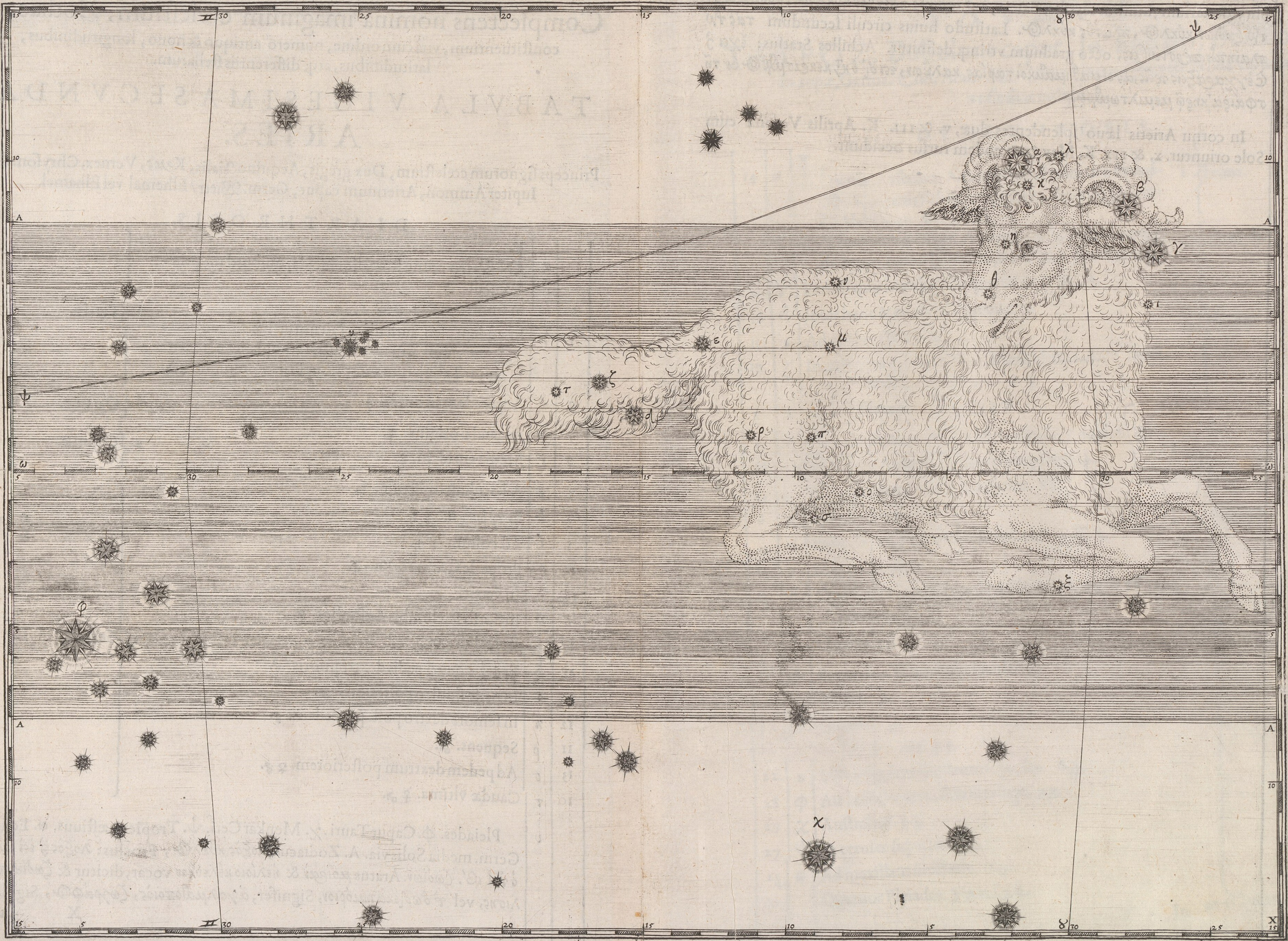
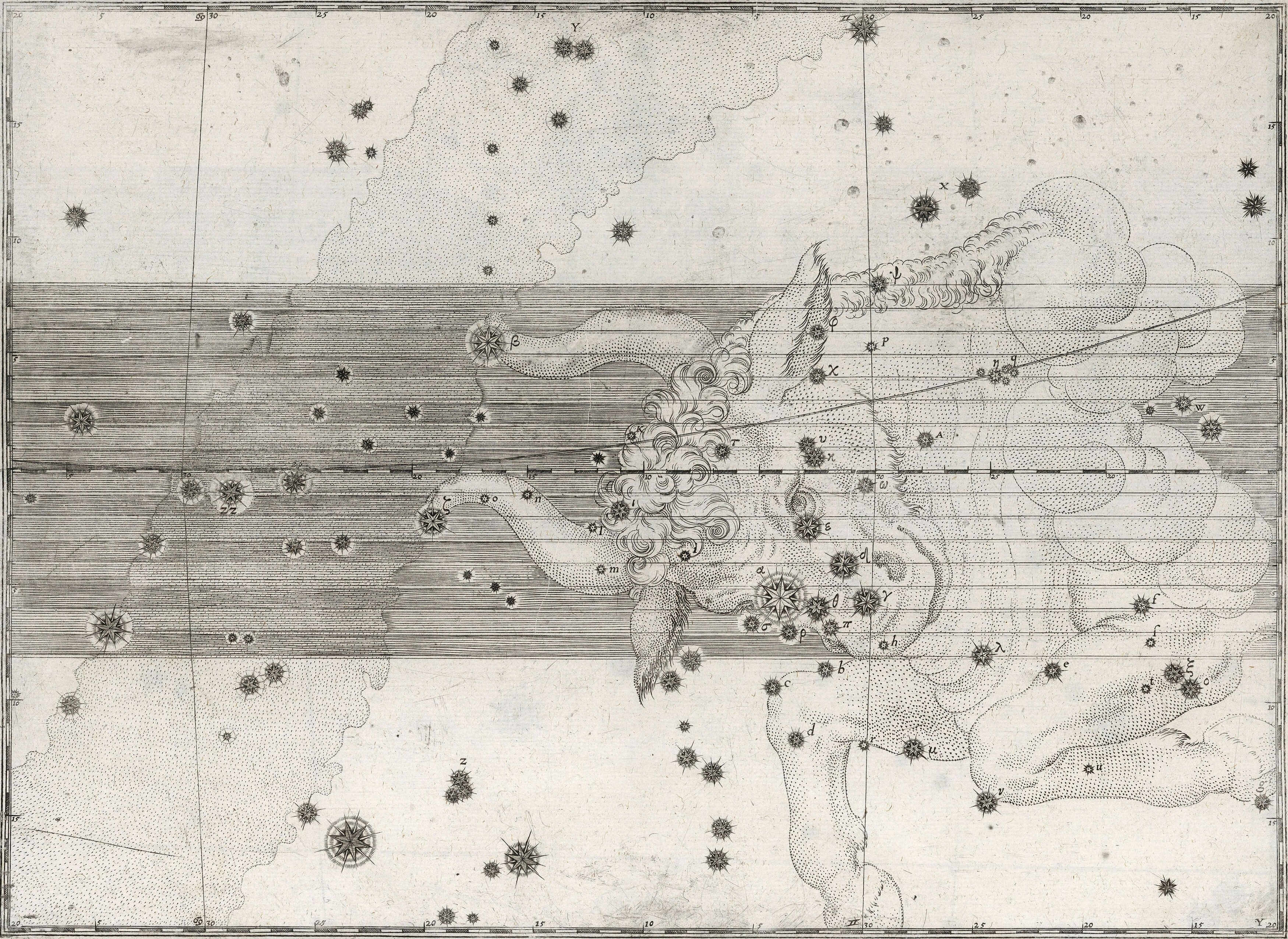
The southern Altar, from the first atlas of the whole sky.
- Chart
- Uranometria
- Astronomer
- Johann Bayer
- Date
- 1603
- Held by
- raremaps.com · via Wikimedia Commons
Format
The full-resolution scan, color-managed to the source — yours to print, study, and explore.
Size
$29.00
The story
A chart from Johann Bayer's Uranometria, published in Augsburg in 1603 by Christoph Mang, the first atlas to cover the whole celestial sphere. Ara, the Altar, is a southern constellation between Scorpius and Triangulum Australe, one of the 48 that Ptolemy described in the second century under its Greek name, Bōmos. Bayer took his star positions from Tycho Brahe's catalogue and laid a grid on every plate so that a star could be placed to fractions of a degree. He lettered the stars in Greek, and his letters are still in use, though the sky has corrected him a little here: Beta Arae now measures marginally brighter than Alpha.
See it on your wall
A window onto the heavens, in your home
Ara, the Altar printed large and framed, hung in rooms like yours. Every edition ships ready to become the piece the room is built around.





About this reproduction
- A faithful reproduction of a public-domain chart held by raremaps.com · via Wikimedia Commons — the work is centuries out of copyright.
- Printed to order on EMA matte art paper, 200gsm. Framed pieces sit in a box frame under acrylic, with no mount (gold-ink editions on specialist press).
- Color-managed to the source scan; we correct nothing and invent nothing.
- Ships in 5–10 business days, rolled in a heavy-wall tube (framed pieces ship flat-packed).
- If it arrives less than perfect, we reprint or refund — your choice.
Why our charts cost more than a poster: we print from the highest-resolution scans in existence, at sizes where the engraving itself becomes visible — the gold figures, the tiny stars, the cartouches — on a matte sheet that shows every line without glare.